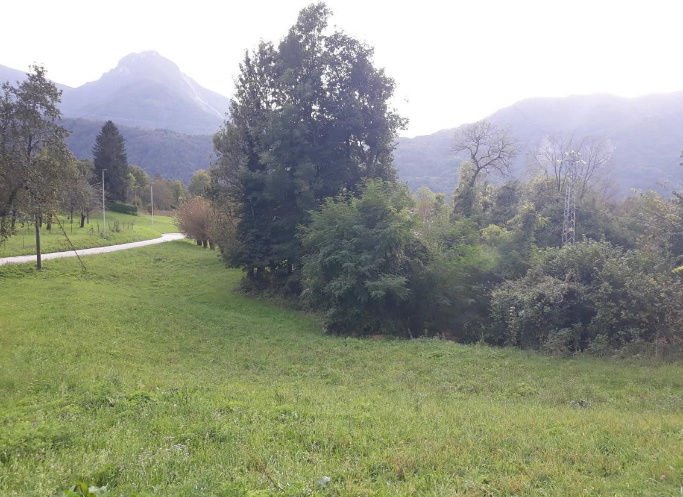
Lungis – Dilignidis
The land economy between Lungis and Dilignidis
Lungis overlooked the banks of the Rio Gorgo with an intentionally dense residential core, aimed at preserving the surrounding fertile soil. The settlement was built on rocky, unproductive ground, while the gentler slopes were divided into long, narrow fields arranged parallel to the contour lines of the ancient glacial basin. The most imposing residences are found along the road leading to the late-medieval church, which originally stood among the cultivated fields. In contrast, the road to Dilignidis climbs steeply to the north, where a second line of expansion developed, consisting of more modest buildings.
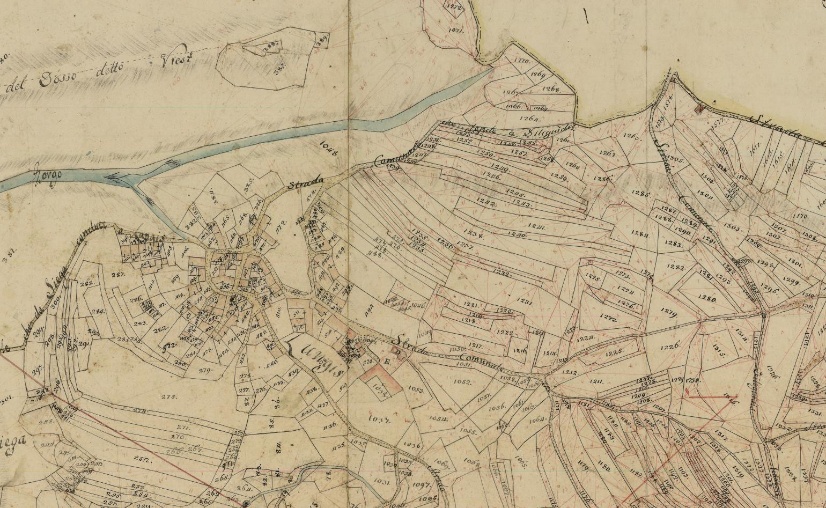
Along the stream: from the village of Dilignidis to the ford
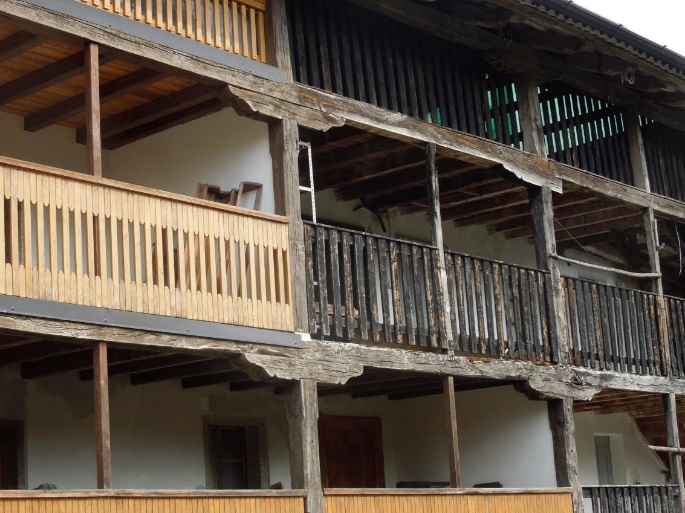
Despite the severe fire of 1886, Dilignidis still preserves some characteristic wooden loggia houses from the late 19th century. However, the village’s current aesthetic is dominated by more recent buildings, whose white plaster has altered its original character. The primitive core seems to have been planned around a cluster of three building rows with a north-south orientation.
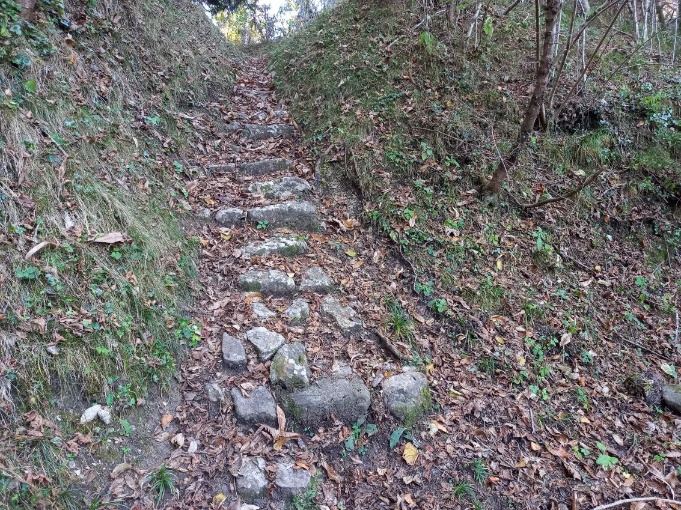
Starting from the church (built outside the village at a later date), the path winds along the ridge above the stream before dropping sharply toward the ford. Although partially overgrown, this historic route remains evocative and well-preserved.
Mulberries and meadows: the agricultural legacy of Lungis
On the right bank, the path emerges from the wooded gorge, opening onto meadows that are still mown: a system of fields used for fodder and livestock farming which, however, is undergoing a sharp contraction in the mid-slope areas.
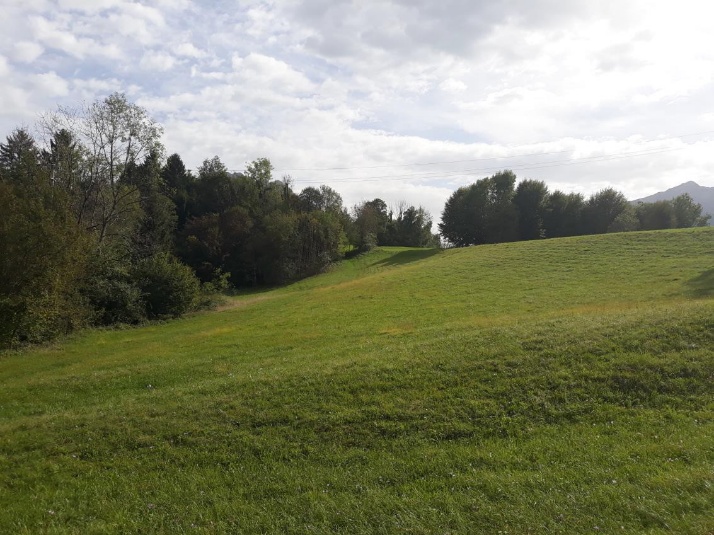
Heading down toward the village, a row of mulberry trees bears witness to the ancient practice of silkworm farming, which was common even at these altitudes. The road, now paved but with little traffic, offers a picturesque entrance to Lungis from above. These lands were once intensely cultivated; today, however, even the most fertile areas have been converted into meadows.
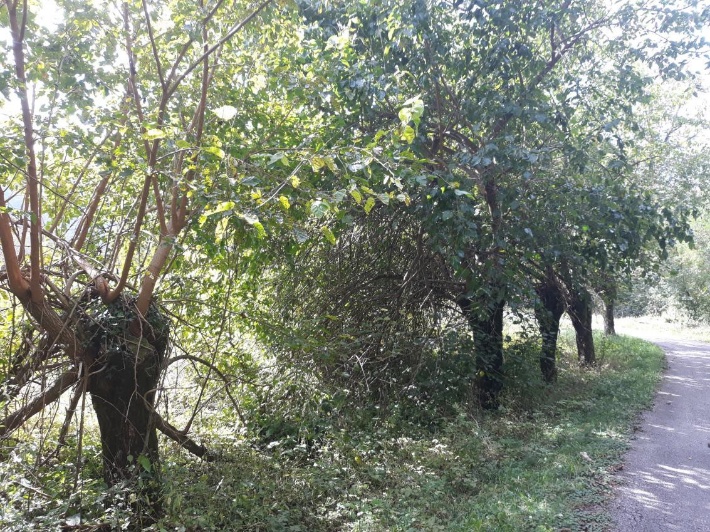
Where the slope makes it difficult to use machinery, spontaneous vegetation takes over again, creating a landscape where permanent grasslands alternate with wooded areas.
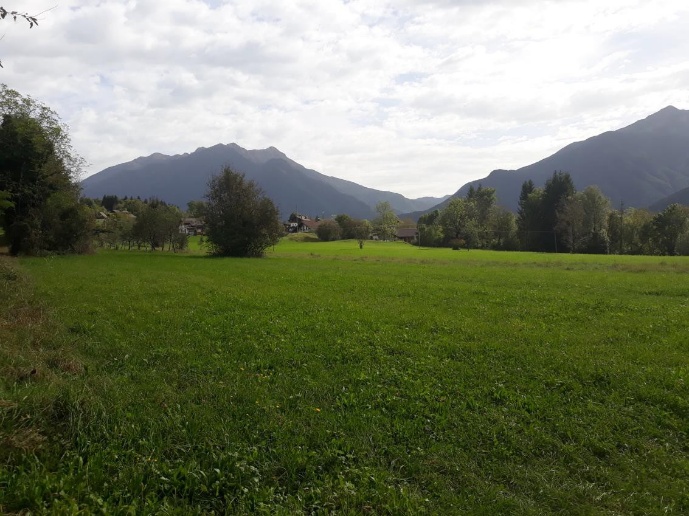
The country road, historically sunken relative to the fields and protected by fences, finally led into the village: access was gained by passing through the ground floor of a row of buildings, with the road level set one story lower than the surrounding countryside.