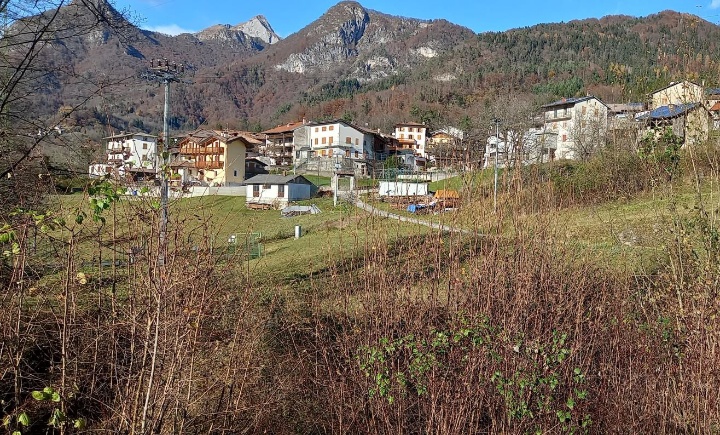
Mediis – Lungis
The historic road system between Lungis and Mediis
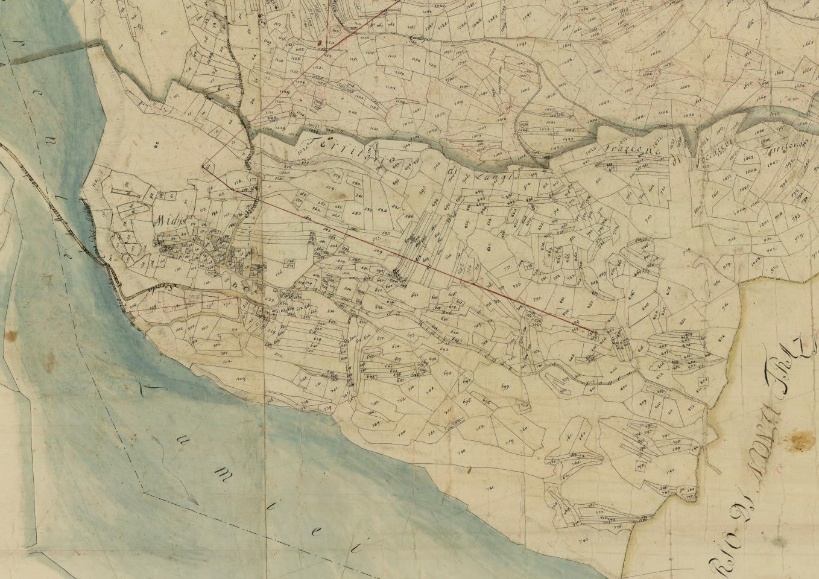
Originally, Lungis was connected to Mediis by a mule track that roughly followed the current road between the two hamlets. Upon reaching Mediis, the path joined the main road coming from Tolmezzo and heading toward Cadore. As documented in the 1807 cartography, the village developed densely around what is now via Castello. Here, the village church stood just above the main road, mirroring the elevated position already seen in Lungis relative to the edge of the medieval settlement.
From Lungis, another path branched off and headed down toward the Lumiei stream. It served a dual purpose: to intercept the water to feed an artificial canal for the mills and to reach the ford to Ampezzo, located at the factory complex known as Borgo Siega.
The mule track to Borgo Siega
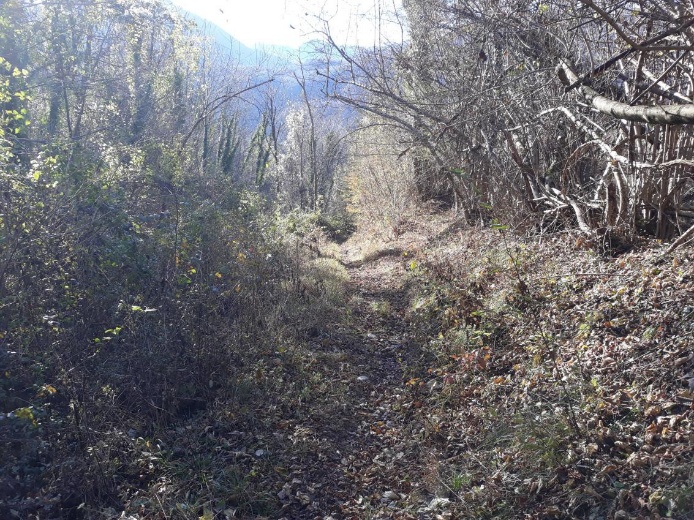
The path leading down from Lungis toward Borgo Siega ran along the edge of the river terrace, serving as a transit route for sheep headed to drink from the Lumiei and to graze on the steep slopes eroded by the Rio. Besides being the main link to Ampezzo, this route was vital to the local economy, as the grain from Lungis and some from Dilignidis passed along its switchbacks.
Precisely to support such a load, the mule track featured a wide roadway paved with glacial cobblestones. To mitigate the steep incline and prevent soil erosion, the path was designed with numerous switchbacks that made the climb less strenuous.
Evolution of the territory and traces of the past
In its final stretch, the road entered Borgo Siega, a hamlet of Lungis inhabited by millers who tenaciously farmed small plots of land reclaimed from the river’s path. It was only with the construction of the State Road and its bridge that the village was formally connected to the territory of Mediis.
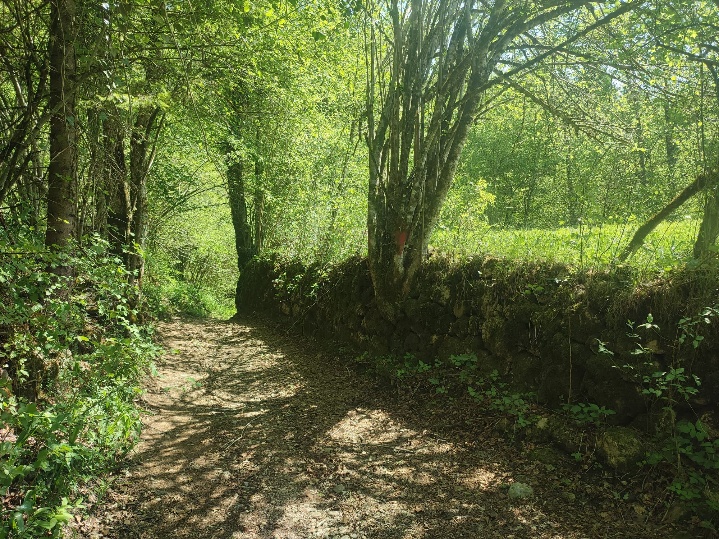
Today, the paved road leading to the Lumiei bridge occupies what was once the riverbed, now partially reforested with a fir plantation. Although the hamlet of Siega now gravitates toward Mediis, the ancient mule track remains as a testament to the historic link with Lungis.
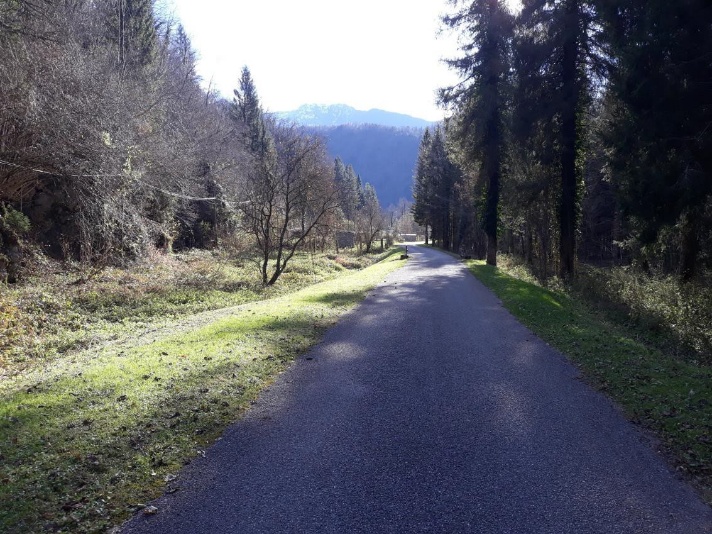
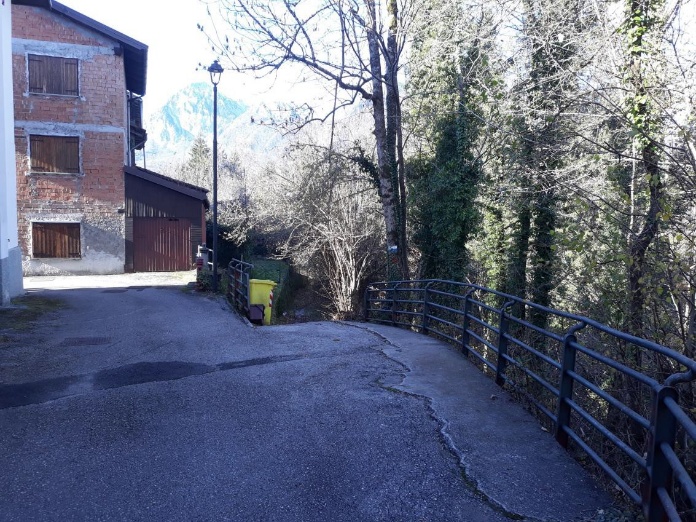
Going up from Mediis toward Lungis along the modern road, you can still find the original path at the hairpin turns built in the late nineteenth century to make it easier for carts and carriages to pass.
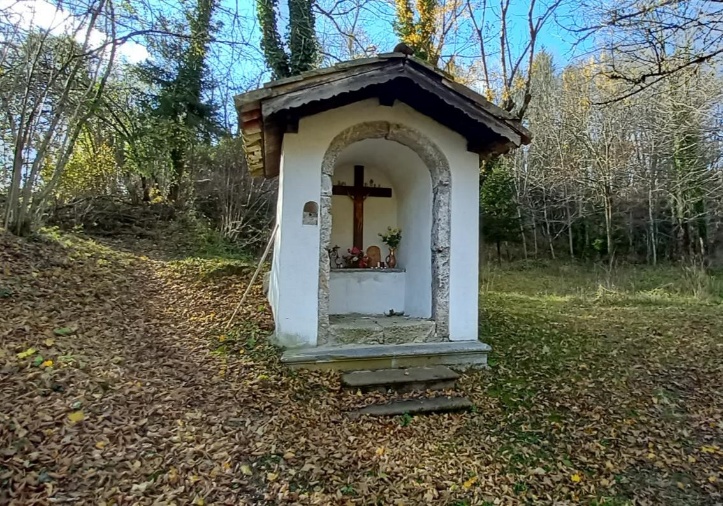
The final stretch of the historic road, though paved today, remains quiet: traveling along it allows you to fully appreciate the arrival into the compact heart of the medieval village.